-
Small and medium-sized businesses often believe they are unlikely targets for cyberattacks. Many assume that attackers focus primarily on large enterprises with vast amounts of data and resources. In reality, the opposite is increasingly true. Cybercriminals frequently target smaller organizations because they tend to have fewer security controls, limited cybersecurity expertise, and less mature risk…
-

For many organizations, cybersecurity is still treated primarily as a technical problem. It is often delegated to IT teams, measured through technical metrics, and discussed only after a security incident occurs. However, modern cyber threats are not just technical disruptions — they are business risks capable of causing financial loss, operational downtime, regulatory penalties, and…
-
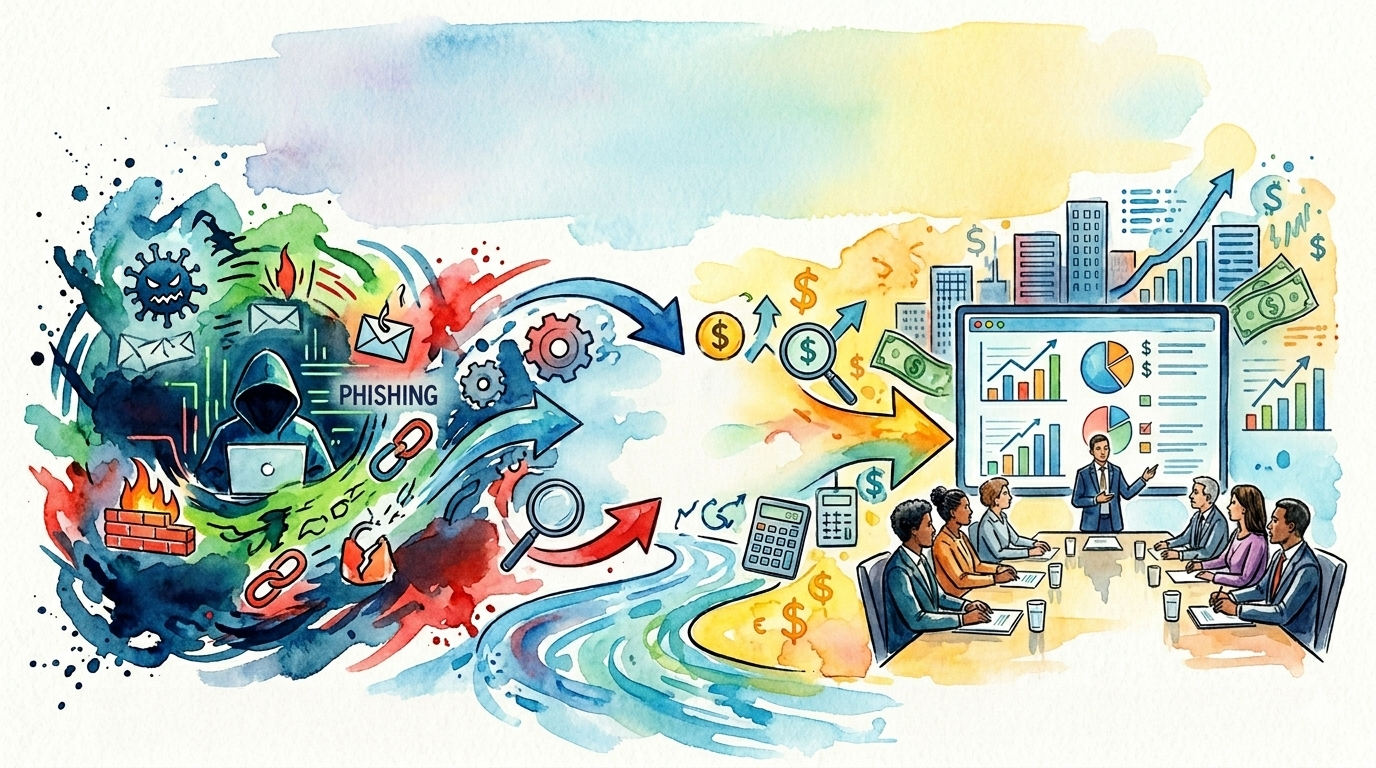
Cybersecurity is still reported in the wrong language. Most boards receive cybersecurity updates filled with: But boards don’t govern vulnerabilities. They govern risk and capital allocation. The real question decision-makers should be asking is: What is our financial exposure if this risk materializes? Until cyber risk is translated into monetary impact, it remains disconnected from…