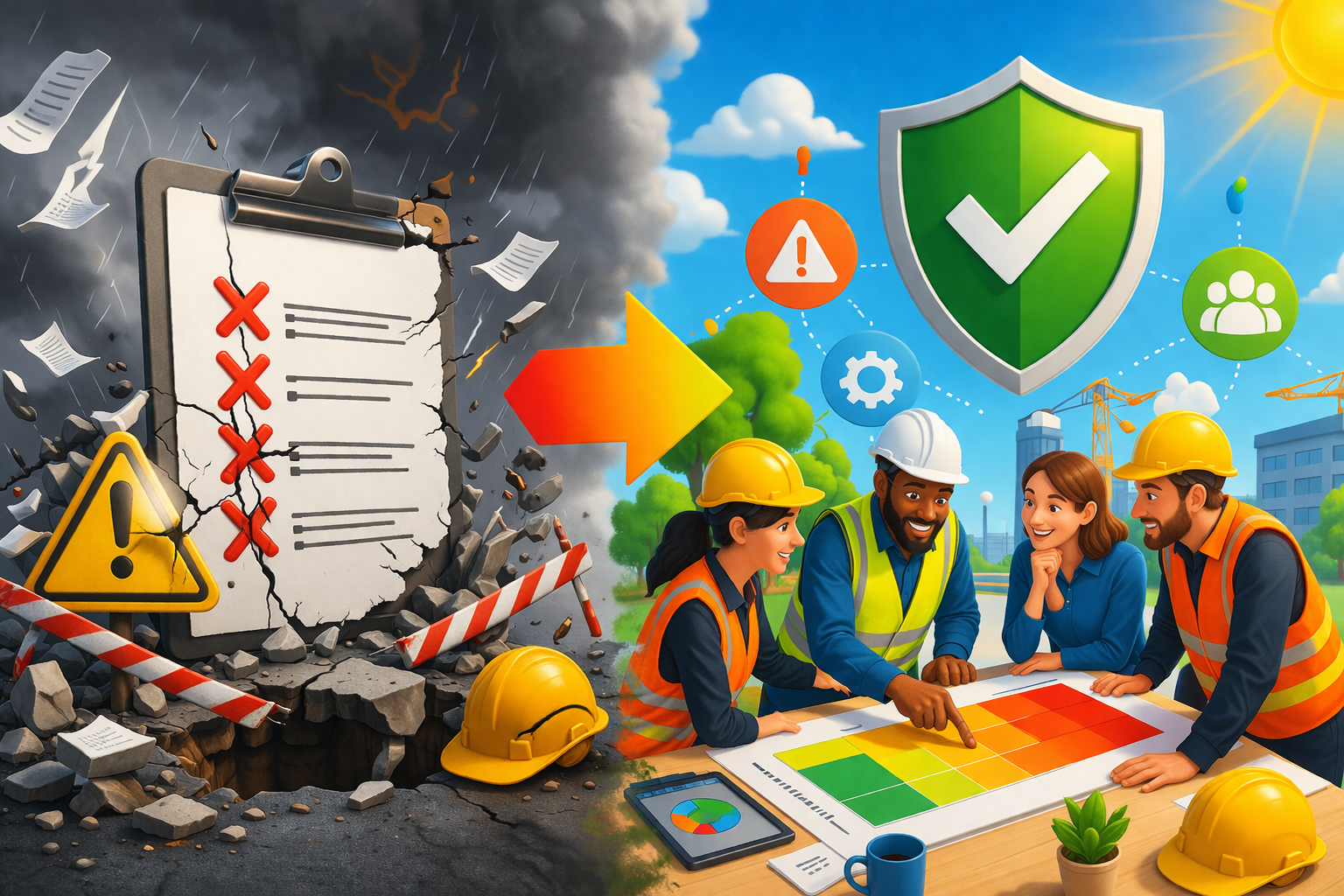
Risk assessments are supposed to be the foundation of any cybersecurity program.
They’re meant to help organizations identify threats, prioritize risks, and allocate resources effectively. On paper, they sound like a strategic advantage.
In reality, many risk assessments end up as checkbox exercises, static documents, or compliance artifacts that don’t meaningfully improve security.
And that’s the problem.
Because when risk assessments fail, everything built on top of them becomes flawed — from security investments to governance decisions.
Let’s break down why this happens—and more importantly, how to fix it.
The Reality: Risk Assessments Often Don’t Work
Most organizations do perform risk assessments.
But very few:
- Use them to drive real decisions
- Update them frequently enough
- Align them with business priorities
According to a PwC Global Risk Survey, only 34% of organizations report that their risk management programs are highly integrated into strategic decision-making.
That’s a serious disconnect.
Because a risk assessment that doesn’t influence decisions… isn’t really serving its purpose.
Why Risk Assessments Fail in Practice
1. They Are Treated as Compliance Exercises
Many organizations conduct risk assessments simply to:
- Pass audits
- Satisfy regulators
- Meet certification requirements
The result?
A document that:
- Looks good on paper
- Gets reviewed once a year
- Is quickly forgotten
Security becomes about “proving” instead of “improving.”
2. They Are Too Theoretical
Traditional risk assessments often rely on:
- Generic threat libraries
- Hypothetical scenarios
- Broad likelihood/impact scoring
But they lack:
- Real-world context
- Business-specific threats
- Operational realities
This leads to outputs that feel disconnected from actual risk.
3. Lack of Business Alignment
One of the biggest failures is this:
Risk assessments are written in technical language, not business language.
Executives don’t think in terms of:
- CVSS scores
- Vulnerability counts
- Technical severity levels
They think in terms of:
- Revenue impact
- Operational disruption
- Regulatory exposure
Without that translation, risk assessments don’t influence decisions.
4. Static and Outdated
Threats evolve constantly.
But many risk assessments are:
- Conducted annually
- Not updated after major changes
- Ignored during rapid growth
According to PwC’s Global Digital Trust Insights, organizations that update risk assessments dynamically are significantly more resilient than those that rely on periodic reviews.
A static risk assessment in a dynamic threat landscape is almost useless.
5. No Clear Ownership or Accountability
Risk assessments often fall into a grey area:
- Security teams create them
- Business units don’t engage
- Leadership doesn’t act on them
Without clear ownership:
- Risks remain unaddressed
- Mitigation plans stall
- Accountability disappears
6. Poor Risk Prioritization
Not all risks are equal.
Yet many assessments:
- Treat risks similarly
- Over-prioritize low-impact issues
- Underestimate systemic risks
This leads to:
- Misallocated budgets
- Security fatigue
- Critical risks being ignored
What Effective Risk Assessments Look Like
Now let’s shift focus.
What actually works?
1. Business-Driven Risk Assessment
Effective risk assessments start with:
- Business objectives
- Critical assets
- Revenue drivers
Instead of asking:
“What vulnerabilities do we have?”
Ask:
“What risks could materially impact our business?”
2. Translate Cyber Risk into Financial Impact
This is where most organizations fail—and where leaders pay attention.
Strong risk assessments quantify:
- Potential financial loss
- Downtime costs
- Regulatory penalties
According to FAIR Institute research, organizations using financial risk modeling see significantly improved executive engagement.
Because money is the universal language of decision-making.
3. Continuous, Not Periodic
Modern risk assessments are:
- Continuously updated
- Triggered by business changes
- Integrated into operations
Examples of triggers:
- New product launches
- Cloud migrations
- Vendor onboarding
Risk assessment becomes a living process, not a yearly task.
4. Clear Ownership and Accountability
Each identified risk should have:
- A defined owner
- A mitigation plan
- A timeline
Without ownership, risk management doesn’t happen.
5. Focus on Actionable Outcomes
A good risk assessment doesn’t just identify problems—it drives action.
Outputs should include:
- Prioritized risk list
- Specific mitigation steps
- Resource requirements
- Decision points for leadership
6. Integration with Strategy and Budgeting
Risk assessments should directly influence:
- Security investments
- Technology decisions
- Business strategy
According to Gartner, organizations that align cybersecurity with business strategy are significantly more likely to achieve desired risk outcomes.
What to Do Instead: A Practical Approach
If your current risk assessment isn’t delivering value, here’s how to fix it:
Step 1: Start with Business Impact
Identify:
- Critical processes
- Revenue-generating systems
- Key dependencies
Step 2: Identify Realistic Threat Scenarios
Focus on:
- Likely attack paths
- Industry-specific threats
- Recent incidents
Step 3: Quantify Risk Where Possible
Even rough estimates help:
- Financial impact ranges
- Downtime costs
- Recovery expenses
Step 4: Prioritize Ruthlessly
Not everything matters equally.
Focus on:
- High-impact, high-likelihood risks
Step 5: Assign Ownership
Every risk must have:
- A responsible stakeholder
- A clear action plan
Step 6: Review Continuously
Update risk assessments when:
- Business changes
- New threats emerge
- Incidents occur
The Bigger Picture
Risk assessments are not just a security activity.
They are a business decision-making tool.
When done right, they:
- Guide investments
- Align leadership
- Reduce real-world risk
When done poorly, they become:
- Documents no one uses
- Exercises that waste time
- False assurances of security
Final Thought
Most organizations don’t fail at risk assessments because they lack tools.
They fail because they approach risk the wrong way.
The goal isn’t to create a perfect assessment.
The goal is to create one that actually drives decisions and reduces risk in the real world.
Appendix: Data Sources & References
- ISACA, State of Cybersecurity 2024 Report
- PwC, Global Digital Trust Insights 2024
- FAIR Institute, Cyber Risk Quantification Research
- Gartner, Cybersecurity Program Effectiveness and Business Alignment Studies